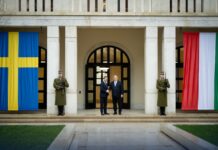



Defence and security were a key focus at the 36th UK-France Summit in Paris on 10 March 2023, with new initiatives to advance what the UK Ministry of Defence (MoD) called “the already strong military relationship between the two nations”.
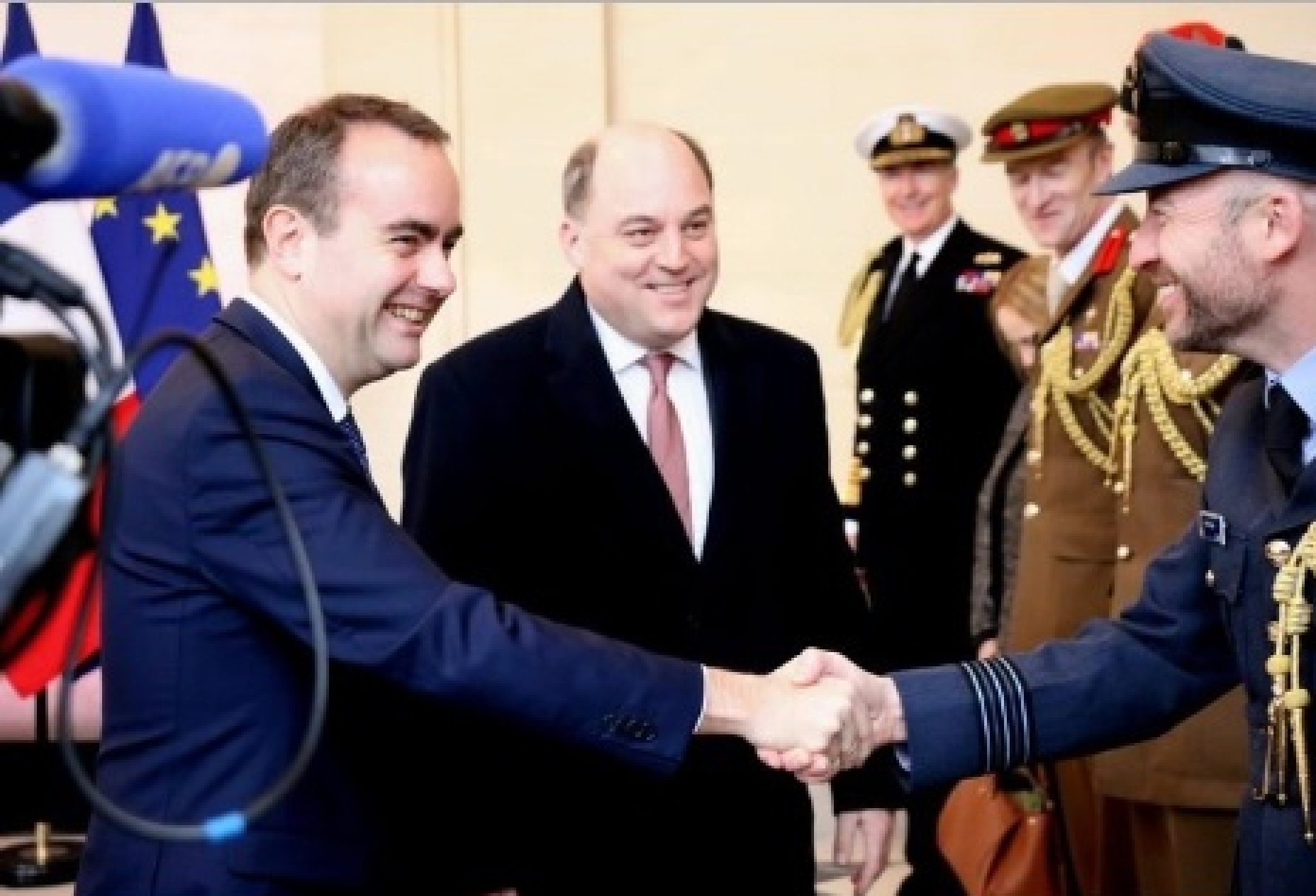
UK Defence Secretary Ben Wallace met France’s Minister for the Armed Forces, Sébastien Lecornu, as UK Prime Minister Rishi Sunak and President Macron outlined “a shared vision to meet the greatest challenges the UK and France face, including in defence and security”, stated a UK MoD press release.
“It has been a great pleasure to meet again with my friend and defence counterpart Sébastien Lecornu,” said UK Defence Secretary Ben Wallace at the summit. “We have agreed to strengthen our defence and security partnership, committing to look at areas of co-operation to increase the interoperability of our joint defence capabilities – and to advance key projects to develop complex weapon systems.
“Our shared and ongoing support for Ukraine remains unwavering,” Wallace added. “We will continue to provide that support for as long as it takes.”
Wallace and Lecornu set out how both nations will continue supporting Ukraine to ensure the Russian invasion of Ukraine would fail. “The UK and France committed to do all they can to strengthen Ukraine’s abilities on the battlefield and ensure the country defend its people and critical infrastructure against Russian aggression,” said a UK MoD press statement. “This includes increased co-operation on provision of equipment, in particular ammunition, and supporting the training of Ukrainian personnel, including marines, in the UK.”
The UK Chief of the Defence Staff, Admiral Sir Tony Radakin, was quoted as saying that France and the UK would “deepen our co-operation, be it supporting Ukraine today or meeting the challenges of tomorrow, from security in the Arctic to carrier deployments in the Pacific.
“We will also pursue a host of joint endeavours,” Adm Radakin added, “from intelligence sharing to complex weapon development. This reflects the mutual respect and confidence that exists between us, our shared technological ambitions, our unwavering commitment to NATO and our recognition that the security of Europe and the Atlantic is tied to that of the wider world.”
During the summit the UK and France also agreed to co-ordinate deployments of the two countries’ aircraft carriers to provide a complementary and more persistent European presence in regions of shared interest. “This will mean routinely providing support for each other’s task groups, co-operating in exercises to prepare our carriers for warfighting, and [exploring] opportunities for the United Kingdom and France to demonstrate the sequencing of more persistent European carrier strike group presence in the Indo-Pacific,” stated the UK MoD press release.
Further integration of the UK and French Armed Forces over the next decade was also discussed, with a vision to enable seamless operations and draw on common intelligence, surveillance and reconnaissance (ISR) data.
The UK and France also agreed to work to ensure interoperability of weapons and platforms across Europe and NATO, including advance landmark projects to develop their future complex weapon systems, such as the Future Cruise and Anti-Ship Weapon (FC/ASW) programme. An agreement was also reached on a new dialogue on defence industrial strategy, along with further co-operation on European air defence capabilities and directed-energy weapons.
In addition, discussions covered strengthening the two countries’ co-operation on homeland defence with a greater focus on cyber activities. The nations also agreed to continue to harness the potential of the Anglo-French Combined Joint Expeditionary Force (CJEF), making it fit for the evolving security environment and new contested areas, including in the High North.
Anglo-French military relations were somewhat strained with the signing of the AUKUS security pact between Australia, the UK and the United States on 15 September 2021. The AUKUS pact, under which it was determined that Australia would procure nuclear-powered submarines with UK and US assistance, cancelled a EUR 56 Bn deal under which France’s DCNS (now Naval Group) would have provided Australia with a fleet of 12 diesel-electric variants of the Barracuda-class nuclear submarine under construction for the French Navy. The French foreign minister at the time, Jean-Yves Le Drian, called the pact “a stab in the back”, but although France recalled its ambassadors from Australia and the US on 17 September 2021, France’s UK ambassador remained in London.
Peter Felstead