




Curtis Hand

During October 2025’s Association of the US Army (AUSA) annual meeting in Washington DC, ESD industry leadership interviewer Curtis Hand had the benefit of a private meeting and demonstration briefing with Kopin’s self-described ‘Turn Around CEO’, Michael Murray.
Westborough, Massachusetts-based Kopin is a leading provider of micro-displays and headset solutions for consumer, enterprise, medical and military wearable applications. Kopin’s unique microLED technology facilities personnel interfaces that enable critical mission data to be put before end-user eyes without causing blindness, diminished capacity, distorted vision, dizziness or any imbalance while allowing for the greatest level of detail clarity possible.
According to Murray, the West has a lot of catching up to do before it can reach Chinese ubiquity of this technology. Captured Russian soldiers in Ukraine have surrendered rifles with Chinese-made microLED rifle scopes.

Murray: MicroLED is critical because it is brighter and more power efficient than previous technology and the technological edge in day and night operations is shifting. While the US and NATO warfighters once dominated, China has made significant advances in microLED technology, investing billions to accelerate its development and deployment.
In response, Kopin has been awarded a new Industrial Base Analysis and Sustainment (IBAS) contract, providing a strategic opportunity to develop colour microLED display technology tailored for NATO warfighters. This initiative aims to restore and enhance allied dominance in low-light and night-time tactical environments through next-generation visual systems.

Murray: MicroLEDs are challenging to manufacture, requiring specialised expertise in micro-display and backplane technologies, as well as advanced fabrication equipment. Their production remains costly due to the complexity and precision involved in getting good yields during production.
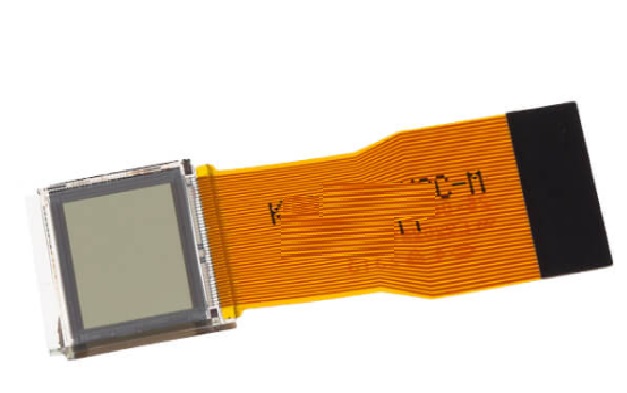
Murray: MicroLEDs offer higher brightness for less power when compared to other display technology and have the capacity to reach brightness levels for daytime readable symbology and video in see-through augmented-reality applications without the need for lens dimming, which is a situational awareness killer.
They also offer a longer operational lifespan due to their use of durable inorganic materials and outperform other display technologies that may lose image vibrancy over time.
ESD: Why is that? Is it related to the ‘O’ – Organic – in OLED (organic light-emitting diode)? What happens when these other technologies fail, or give up the ghost? Can microLEDs be swapped out?
Murray: OLED and microLED represent distinct display technologies. OLED screens utilise organic compounds that may degrade over time. In contrast, microLEDs are built with durable inorganic materials that offer extended longevity.
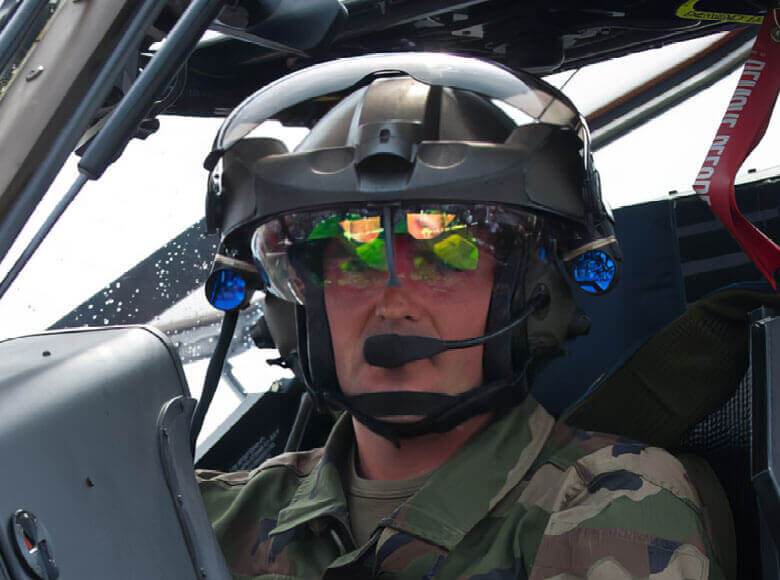
Murray: Kopin’s microLED technology already has the dynamic range to support daytime and low-light-level colour imagery.
Kopin’s DarkWAVE technology is also an example of a clip-in module that enables full-colour augmented reality overlays of IR sensors and digital night vision in low-light and night-time environments. The clip-in DarkWAVE module attaches to traditional night vision goggles used by warfighters to enhance their situational awareness with symbology and digital overlays of various sensors to augment their night vision.
ESD: Which countries pose the greatest threat in this technology area?
Murray: China, which has invested heavily – over USD 100 billion (EUR 86 billion) – into microLED production and stockpiling. China may also supply to non-NATO countries like Russia.
ESD: Why is it important to extend NATO defence-industrial capabilities in this area?
Murray: Expanding NATO’s defence-industrial capabilities is essential to safeguarding warfighters and maintaining operational dominance, day or night. Strengthening the alliance’s readiness and advancing technological superiority are critical to meeting evolving global threats.

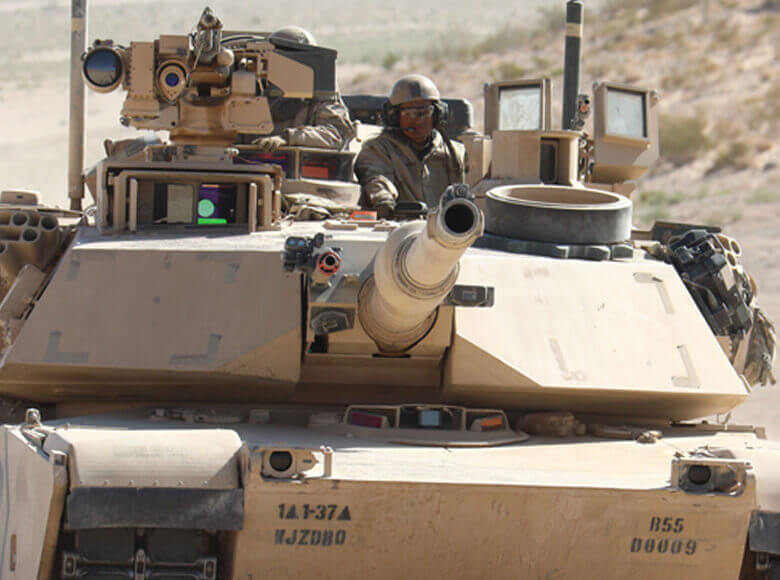
Murray: This has the potential to be problematic, as our goal is to equip warfighters with the most advanced technologies available, ensuring they maintain a decisive edge over adversaries. Mission success depends on delivering superior capabilities that outmatch those of our adversaries.
ESD: Why does the West seem to have an increasing technology gap with Asia?
Murray: Western markets continue to send production and development dollars to China for lack of incentives to onshore innovation, production and intellectual property (IP). This accelerates Asia’s resources to outpace the US and NATO.
ESD: How far behind its opponents are NATO forces overall? What can the North American/European combined defence-industrial complex do about this?
Murray: On the whole, US and NATO forces maintain a lead in advanced weaponry, equipment and multinational co-ordination, but face challenges in sustaining readiness, scaling defence production and further advancing electronic capabilities.

China’s innovation and substantial investments in emerging technologies are contributing to a widening technology gap with the Western world, which is fuelled by US and NATO consumers and businesses who continue to source via China.

Murray: ‘Supply chain sovereignty’ and ‘domestic capability’.
ESD: Thank you, sir.