




Peter Felstead

Thales has unveiled a new training capability that enables the easy integration of drones into live training simulation systems.
Introduced at the 2025 I/ITSEC exhibition in Orlando, Florida, which runs from 1 to 4 December, the new capability enables armed forces to train for both ‘friendly’ and hostile drone scenarios, thereby enhancing the effectiveness of operational readiness.
The drone agnostic kit solution is compatible with drones in categories C0–C6 and A1–A3 (ranging from a few hundred grammes to several dozen kilogrammes). Each drone can be equipped with a kit that includes sensors and indicators to simulate the effects of drone neutralisation and provide real-time feedback on the drone’s status during training exercises. Drones can be fitted with transmitters to simulate loitering munitions (self-detonation) or armed drones (virtual release of explosive devices). All exercise data is automatically recorded for post-training debriefing and detailed analysis.
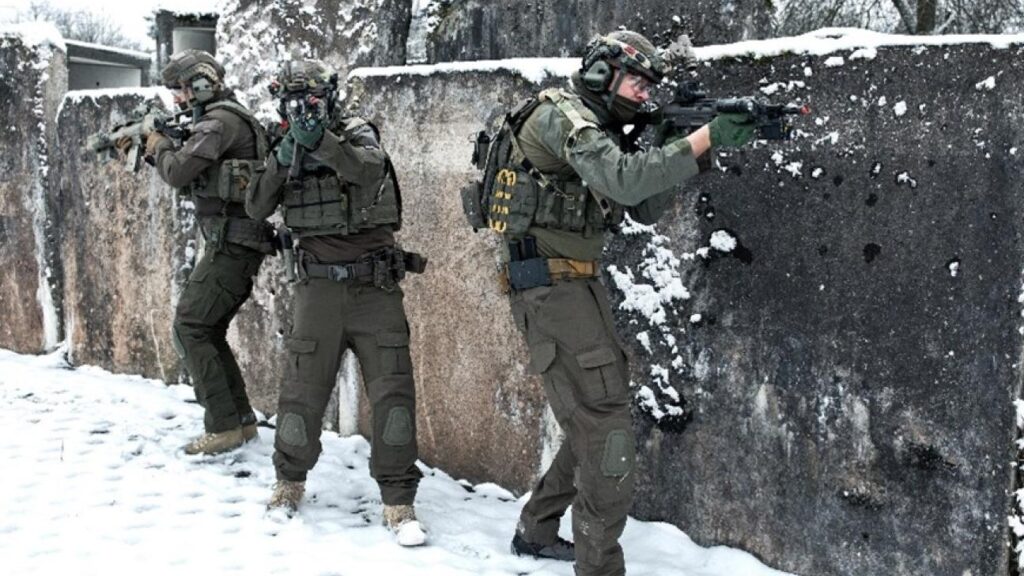
Thales live training solutions for collaborative engagements are deployed in a number of major combat training centres, such as CENZUB in France and the GAZ (Gefechtsausbildungszentrum) in Switzerland.
“Thales’ combat-proven training systems deliver robust and user-friendly capabilities for today’s armed forces,” the company stated. “With the introduction of this new drone training capability, which can be seamlessly integrated into live training, Thales further demonstrates its ability to adapt to an ever-changing operational environment.”
Benoit Broudy, vice president of training and simulation activities at Thales, was quoted as saying in a company press release, “Drones are playing an increasingly decisive role on the battlefield, and it is crucial to have training solutions that can accurately simulate these new threats.
“Thales’ new drone training capability offers an adaptable and reliable training experience, allowing military personnel to effectively prepare for engagements and confrontations with these devices,” Broudy added. “We are proud to support the armed forces by providing training solutions that are as close as possible to their operational realities.”