



Peter Felstead

Lockheed Martin, MBDA and the F-35 Joint Program Office have recently completed a series of critical ground-based integration tests with the Meteor beyond-visual-range air-to-air missile (BRVAAM) and the F-35A, bringing the pair closer to operational readiness, Lockheed Martin announced on 3 December 2025.
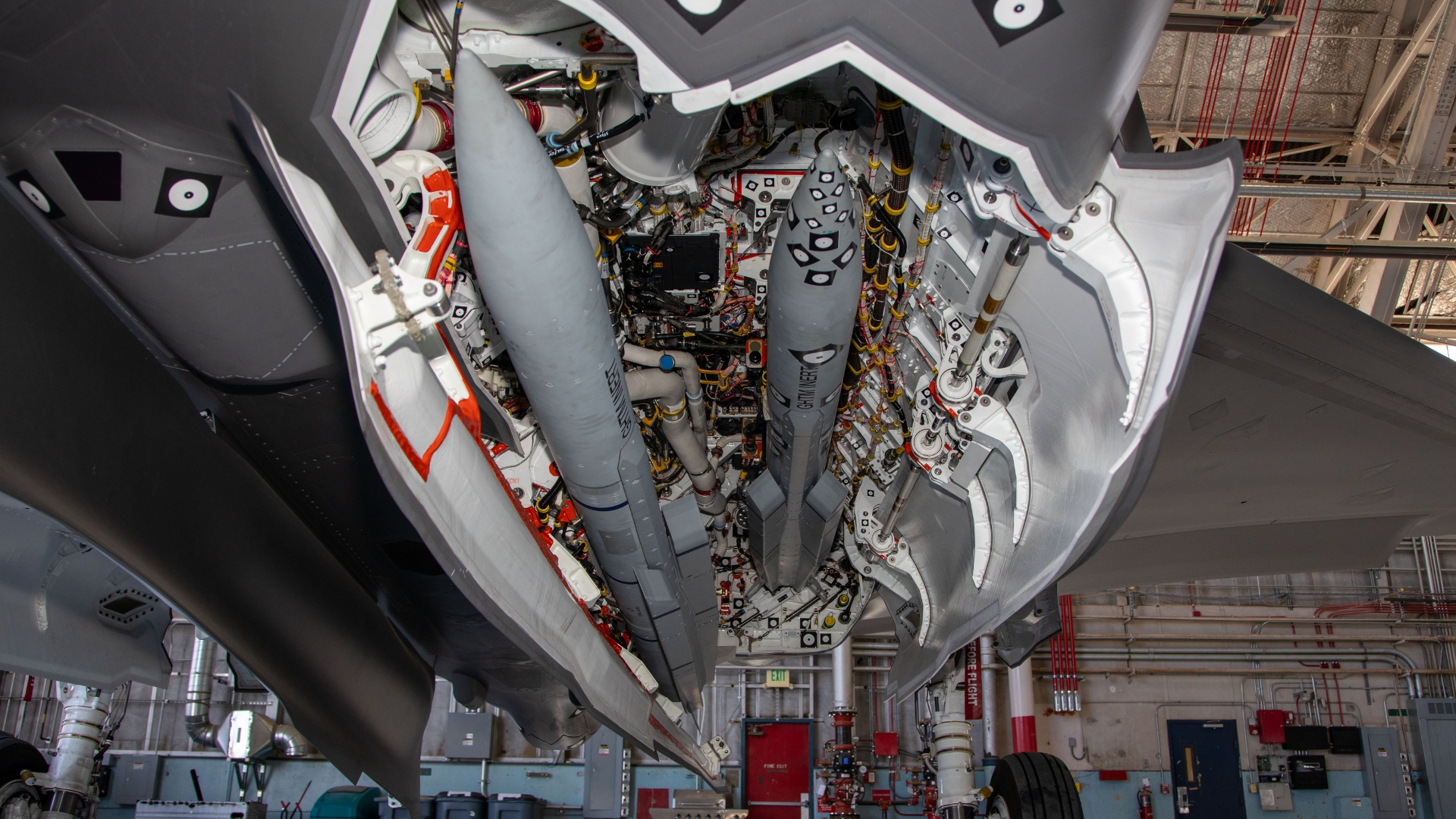
Conducted at Edwards Air Force Base in California, the ground vibration testing and fit checks validated key hardware responses between the F-35A and the Meteor missile: a key step before airborne tests can begin. Engineers evaluated the data collected from the tests to confirm that the missile can be safely stowed and deployed from the F-35A’s internal weapons bay, preserving the aircraft’s stealth profile.
“One ground test remains before clearance to start flight testing, bringing the Meteor missile and the F-35A one step closer to operational capability,” Lockheed Martin stated.
In February 2025 the UK Royal Air Force announced that an inert Meteor missile had been flight-tested on an F-35B for the first time. The sorties were flown by a US Marine Corps F-35B out of Naval Air Station Patuxent River in Maryland, facilitated through collaboration between the UK and US governments, the UK Ministry of Defence and its Defence Equipment & Support organisation, MBDA and Lockheed Martin.
While the UK is leading the campaign to integrate Meteor onto the F-35B, Italy is sponsoring the weapon’s integration onto the F-35A.
The Meteor missile is currently the primary BVRAAM for the Eurofighter Typhoon, Dassault Rafale and Saab Gripen. It has an official maximum range of 120 km and a sizeable no-escape zone for hostile targets, as its ramjet powers the missile all the way to its engagement.