


In collaboration with the US Army’s 25th Infantry Division (25ID), CPE C3N, multiple US Army stakeholders and several industry partners including Raft and Accelint, Lockheed Martin has delivered and successfully demonstrated the first iteration of a Next Generation Command and Control (NGC2) prototype, the company announced on 23 January 2026.
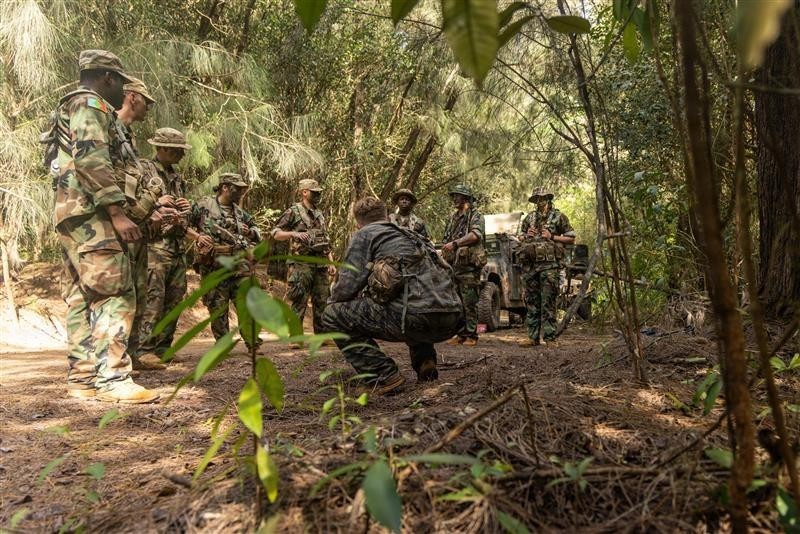
The demonstration took place during the 25ID’s ‘Lightning Surge 1’ exercise, which took place from 20 to 22 January at Schofield Barracks in Hawaii.
The 25ID is one of two US Army divisions selected to experiment with NGC2, which is the army’s effort to fundamentally change how digital mission command is conducted utilising a common data layer to provide a continuous common operating picture with a single, integrated view of the battlefield to enable swift and decisive action.
Lockheed Martin serves as the US Army’s Team Lead for the 25ID NGC2 prototype, which is intended to provide the army with warfighting data for decision dominance by unifying it in a single common data layer. The company’s NGC2 prototype operates on the 25ID’s existing transport and computing environment, extending across echelons from division to platoon and from cloud to edge.
During ‘Lightning Surge 1’ the Lockheed Martin team showcased the rapid deployment of prototype capability, just one month after representative NGC2 hardware was delivered and installed to the 25ID’s Home Station Mission Command Lab. To enable commanders and warfighters to make decisions more rapidly, the Lockheed Martin team delivered the foundation of the 25ID’s NGC2 prototype with a common data layer augmented by artificial intelligence (AI) tools, one of which enables voice and chat natural language processing for spot reporting.
The common data layer provides the US Army with improved command and control capabilities. Once information is updated in the data layer, it is updated everywhere, in real time, with no more ‘swivel chair’ manual processes. When seconds matter most, that time difference is critical, Lockheed Martin noted.
“Our goal during the NGC2 Lightning Surge events is to prove speed and warfighter-centred development at every step,” Chandra Marshall, vice president of multi-domain combat solutions at Lockheed Martin, was quoted as saying in a company press release. “Our team is focused on strong collaboration with the army and the best of industry partners while remaining flexible, iterating in real time and accelerating the delivery of capability.”
Each ‘Lightning Surge’ exercise will add new functionality onto the existing data foundation, demonstrating iterative continuous growth, informed by constant soldier feedback, within the modular architecture that scales from joint fires to multi-domain lethality.
‘Lightning Surge 2’ is already on the calendar in February 2026 and will focus on a fires mission thread supporting the 25ID mission.