




Rheinmetall officially opened its new factory in Zalaegerszeg, Hungary, on 18 August 2023. The new plant, which the company says “marks a major milestone for Rheinmetall and underscores the group’s commitment to Hungary”, will in future produce the Lynx infantry fighting vehicle (IFV) for the Hungarian Defence Forces.
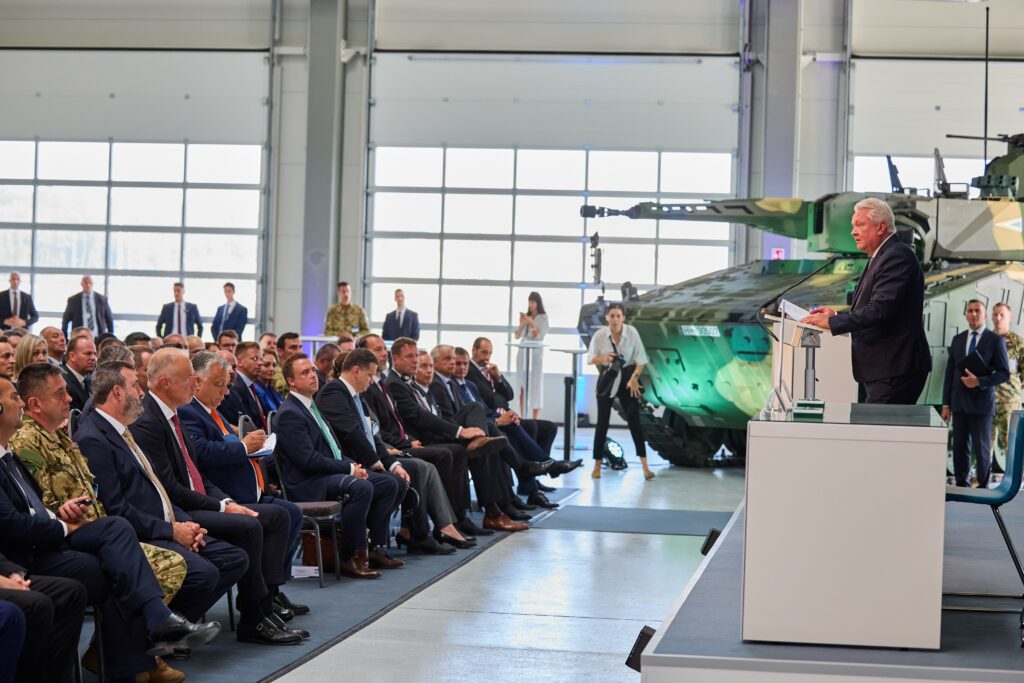
The Hungarian Ministry of Defence contracted with Rheinmetall to supply combat vehicles and related services worth over EUR 2 Bn in September 2020. In the first production phase of this deal Hungary will take delivery of 46 Lynx IFVs and command-and-control vehicles as well as nine Büffel/Buffalo 3 armoured recovery vehicles, all made in Germany. In a second phase a further 172 Lynx IFVs and combat support vehicles are to be produced in Hungary, the first of which are to be delivered in 2024. In addition to armoured vehicles, the scope of Rheinmetall’s Hungarian contract also includes ammunition and logistic services, training and simulators, as well as 38 military trucks.
“The opening of Rheinmetall’s new factory in Zalaegerszeg is a significant step for our company and a sign of our close ties with the government and armed forces of Hungary: an EU partner and fellow NATO member state”, Armin Papperger, chairman of the executive board of Rheinmetall AG, was quoted as saying in a company press release. “We’re proud to be part of the growing industrial community in Zalaegerszeg and look forward to working with local partners and drawing on local talent. Hundreds of people are working together here in Zalaegerszeg to produce top-notch military systems for the Hungarian armed forces as well as export customers.”
Rheinmetall has stated that it sees Hungary as a home market to be supplied with Hungarian-made products. It is therefore building a new development, production and test centre on a 33-hectar site in Zala County in southwest Hungary.
Under its Zrinyi 2026 initiative Hungary has increased its military spending and expects to reach the NATO-stipulated target of spending 2% of GDP on defence by 2024.
Peter Felstead