

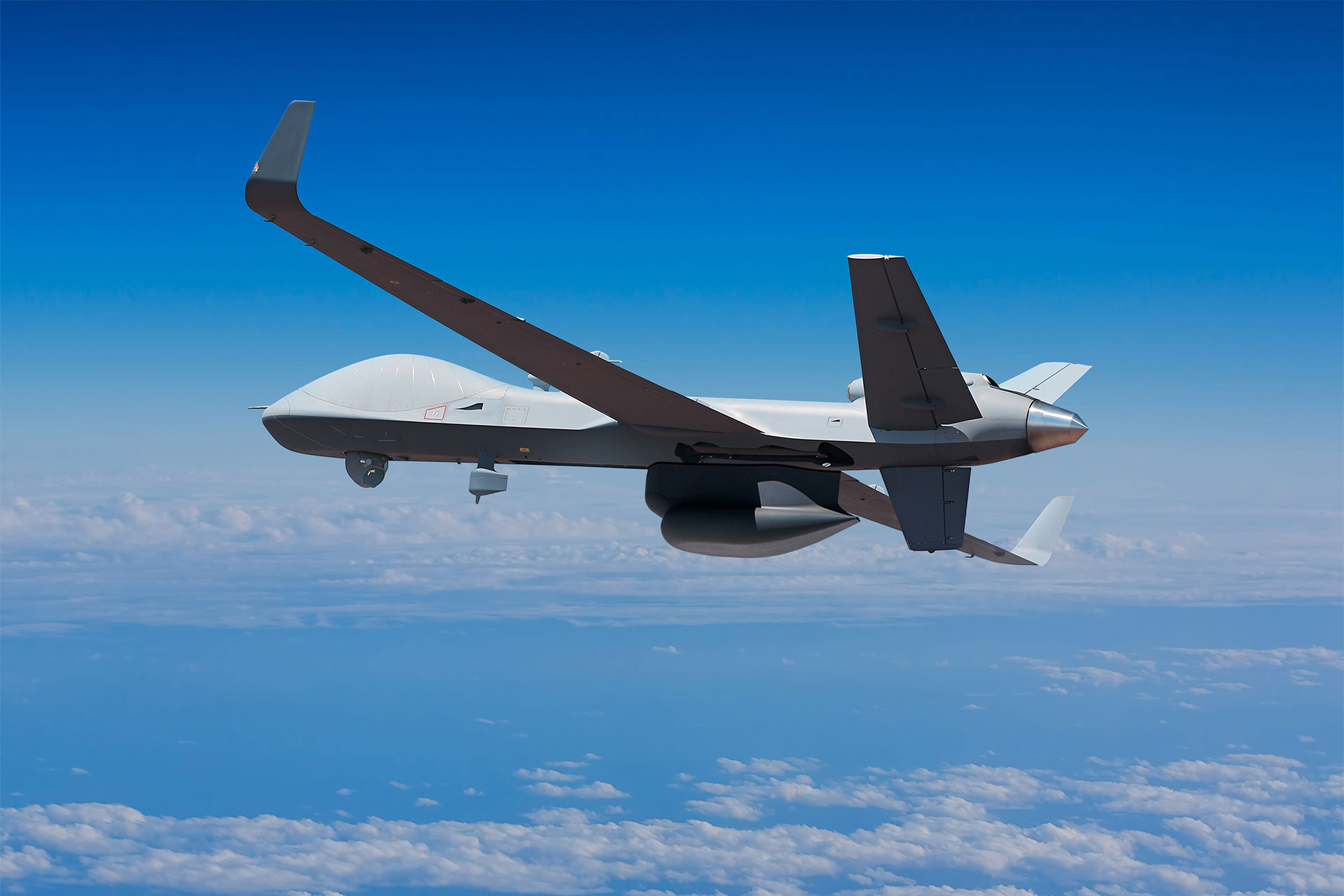

The US State Department has approved a potential Foreign Military Sale (FMS) to Canada of munitions and other systems to be integrated onto the General Atomics Aeronautical Systems Inc (GA-ASI) MQ-9B SkyGuardian unmanned aerial vehicle (UAV), the US Defense Security Cooperation Agency announced on 15 September, even though Canada has not yet selected the MQ-9B.
The proposed FMS, which would be worth an estimated USD 313.4 M (EUR 293.7 M), has been passed to the US Congress for final approval.
Canada decided that it would procure UAVs in the SkyGuardian class in 2017 and issued a draft request for proposals (RfP) to that effect in February 2020, after which an official RfP emerged in February 2022. Although both GA-ASI and L3 Technologies MAS initially responded to this, the latter subsequently withdrew its bid. This left GA-ASI as the sole bidder to issue a proposal, which it did in August 2022.

The munitions and systems requested by Canada for its potential MQ-9B purchase include: 12 AN/APY-8 Lynx synthetic aperture radars; 219 AGM-114R2 Hellfire II missiles; 18 KMU-572 tail kits for the GBU-38 Joint Direct-Attack Munition (JDAM) and GBU-54 Laser JDAM; 12 Mk82 500 lb general-purpose bombs; and six Mk82 filled inert bombs. Also included are Due Regard Radars; SAGE 750 and SNC 4500 electronic support measures systems; AN/ARC-210 radios; Compact Multi-Band Data Links; KY-100M narrowband/wideband terminals; KOR-24A small tactical terminals; High-bandwidth Compact Telemetry Modules; KIV-77 cryptographic appliques and other Identification Friend or Foe (IFF) equipment; AN/PYQ-10C simple key loaders; Common Munitions Built-In-Test/Reprogramming Equipment; FMU-139 Joint Programmable Fuses; M299 Hellfire launchers and training missiles; DSU-38 precision laser guidance sets; spare and accessories; and various aspects of testing, training, logistics, software and programme support.
The DSCA stated that the proposed MQ-9B systems and munitions package for Canada – should it make a SkyGuardian purchase – “improve Canada’s capability to meet current and future threats by enabling unmanned surveillance and reconnaissance patrols of its northern Arctic territories”.
The DSCA also said the package would “enable Canada to optimally fulfill its North American Aerospace Defense (NORAD) and NATO missions while increasing interoperability with US and NATO forces”.
Peter Felstead